
Background
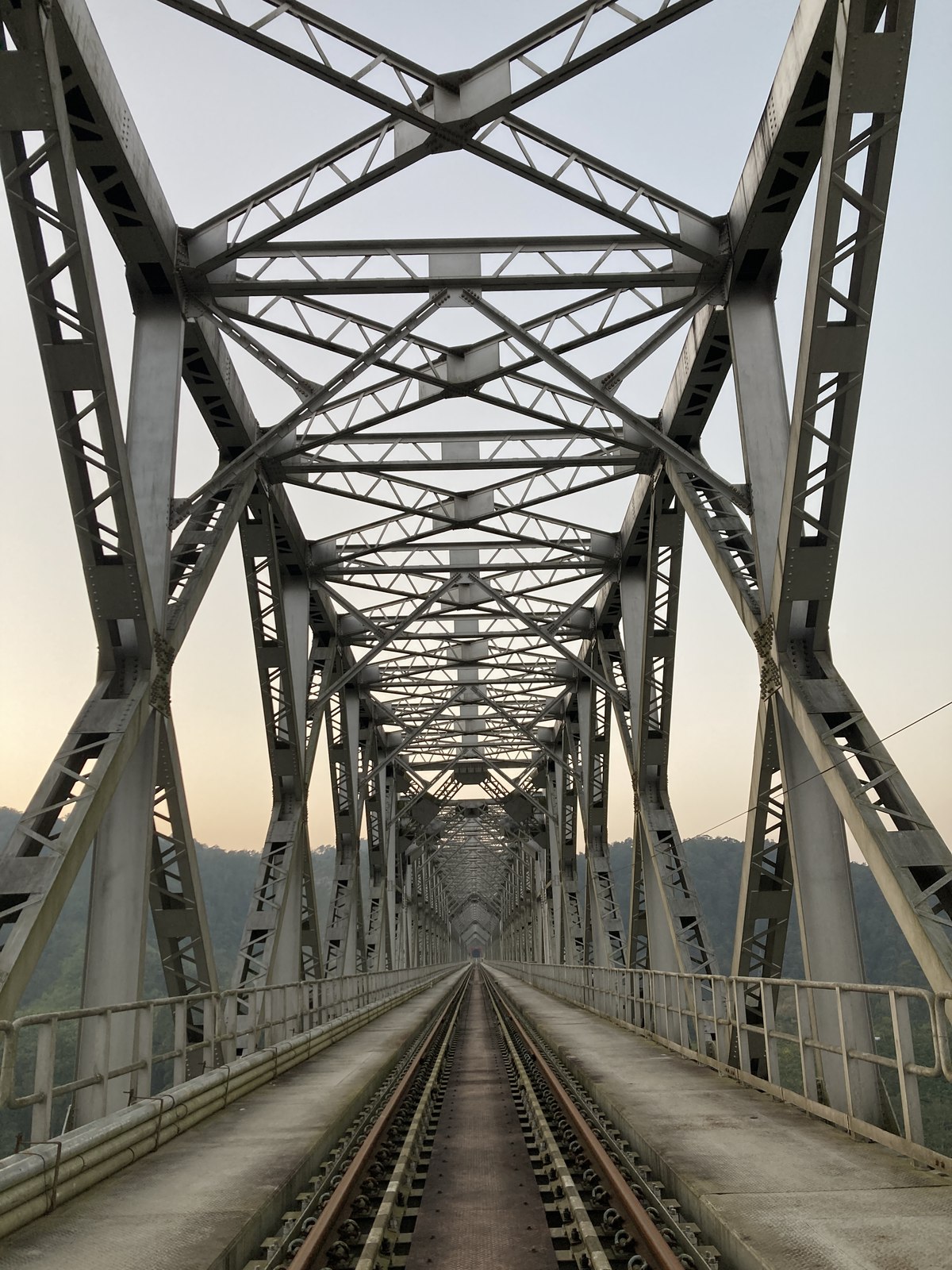
Raising the permitted operating speed on a railway line is not a schedule decision – it is a structural one. Every bridge on the section has to be shown to perform safely at the proposed higher speed, because deflection behavior under a moving load is speed-dependent: dynamic amplification changes as a train's speed approaches a bridge's characteristic response frequencies. For a set of five major bridges on the Northeast Frontier Railway (NFR) network in Manipur, Hone SHM was engaged, in collaboration with IIT Guwahati, to generate the dynamic deflection data needed to support that decision.
Scope of Work
- Dynamic deflection measurement across five major bridges.
- Loading using a test locomotive at multiple controlled speeds.
- Sensor installation at heights of 70 to 100 metres above ground level on some structures.
Method
A test locomotive was run across each bridge at three controlled speeds – 5 km/h, 30 km/h and 60 km/h – allowing the team to build a speed-versus-deflection response curve for each structure rather than a single data point. This is the detail that matters for a speed-certification decision: if dynamic deflection increased disproportionately at higher speed on any span, that would flag a resonance concern requiring further investigation before higher speeds were cleared.
Instrumentation on these bridges was demanding in its own right: sensors and data acquisition equipment had to be installed and powered at heights of 70 to 100 metres above ground level on some spans, requiring careful rigging and access planning alongside the instrumentation work itself.
| Bridges tested | 5 major NFR bridges, Manipur |
|---|---|
| Test loco speeds | 5 km/h, 30 km/h, 60 km/h |
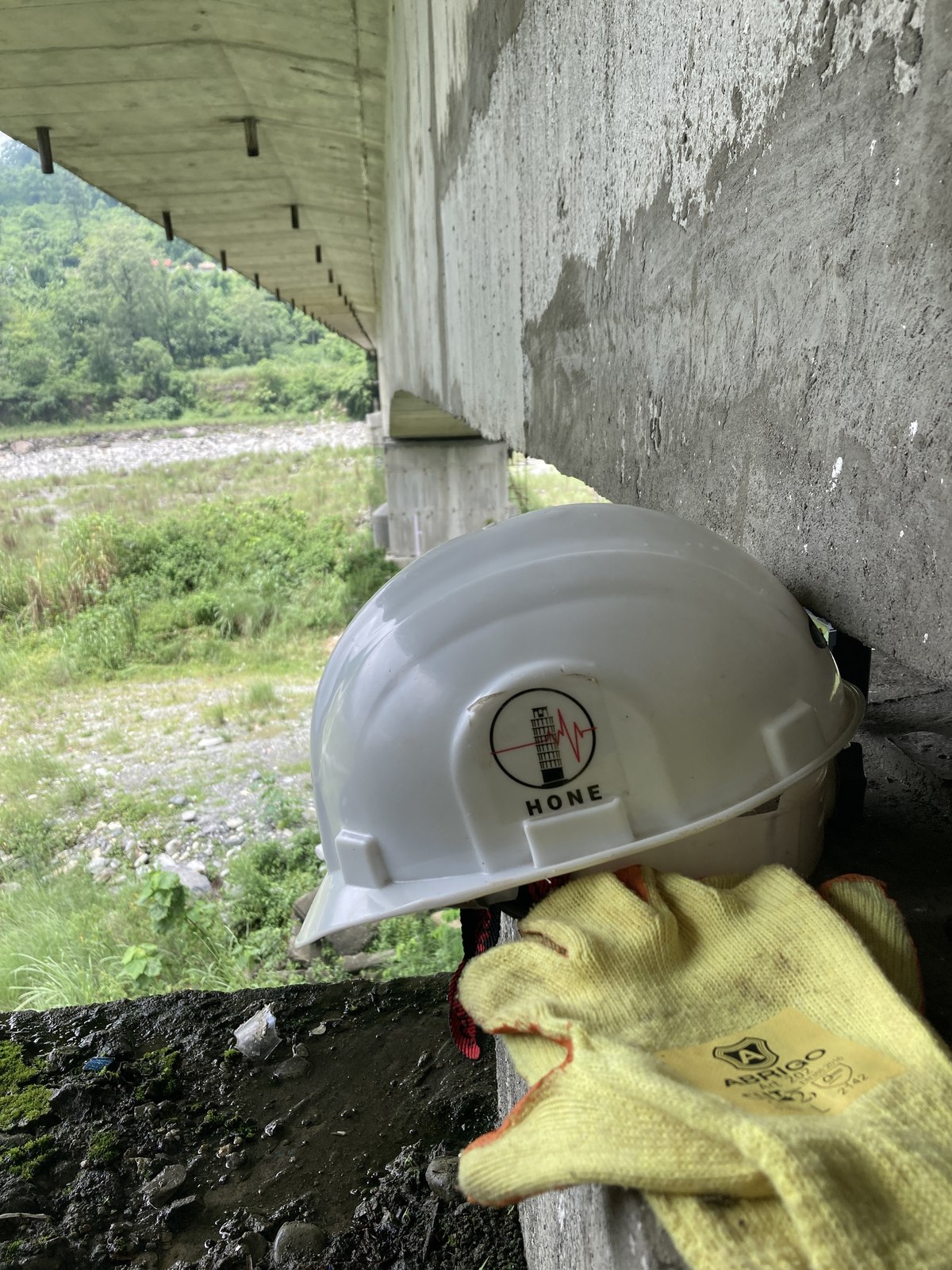
| Installation height | 70–100 m above ground |
| Research partner | IIT Guwahati |
Findings & Significance
By characterizing each bridge’s dynamic deflection response across a realistic speed range rather than a single test speed, the project gave Northeast Frontier Railway a structural basis for speed-certification decisions on this section – grounded in measured behavior on the actual structures involved, not extrapolation from a design model alone.
Dynamic amplification does not scale linearly with speed — which is exactly why a bridge has to be tested at more than one speed before its limit is raised.
The collaboration with IIT Guwahati reflects how Hone SHM often works on assignments of national infrastructure significance: pairing our field instrumentation capability with academic research partners to bring additional analytical rigor to safety-critical decisions.