
Background
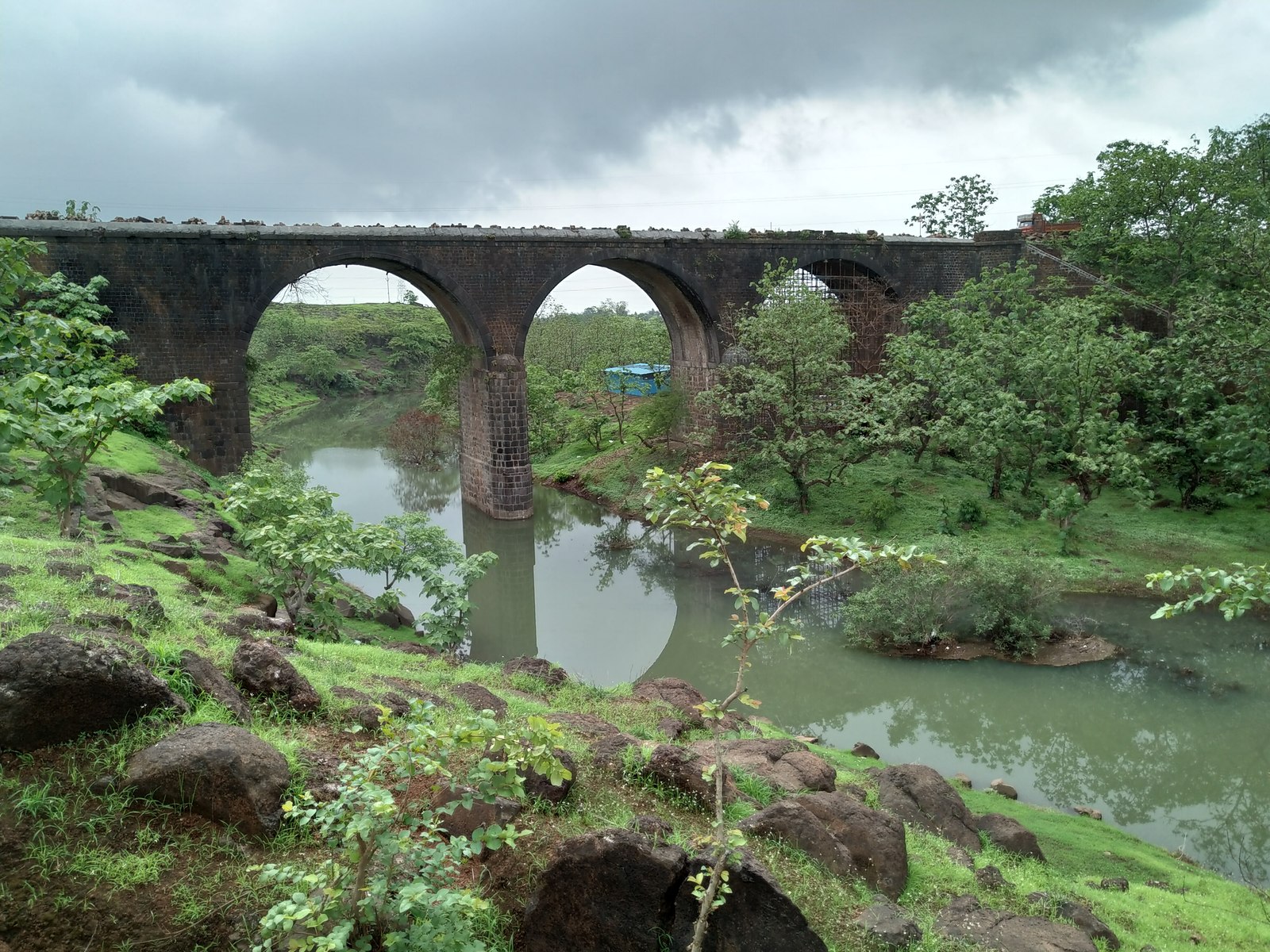
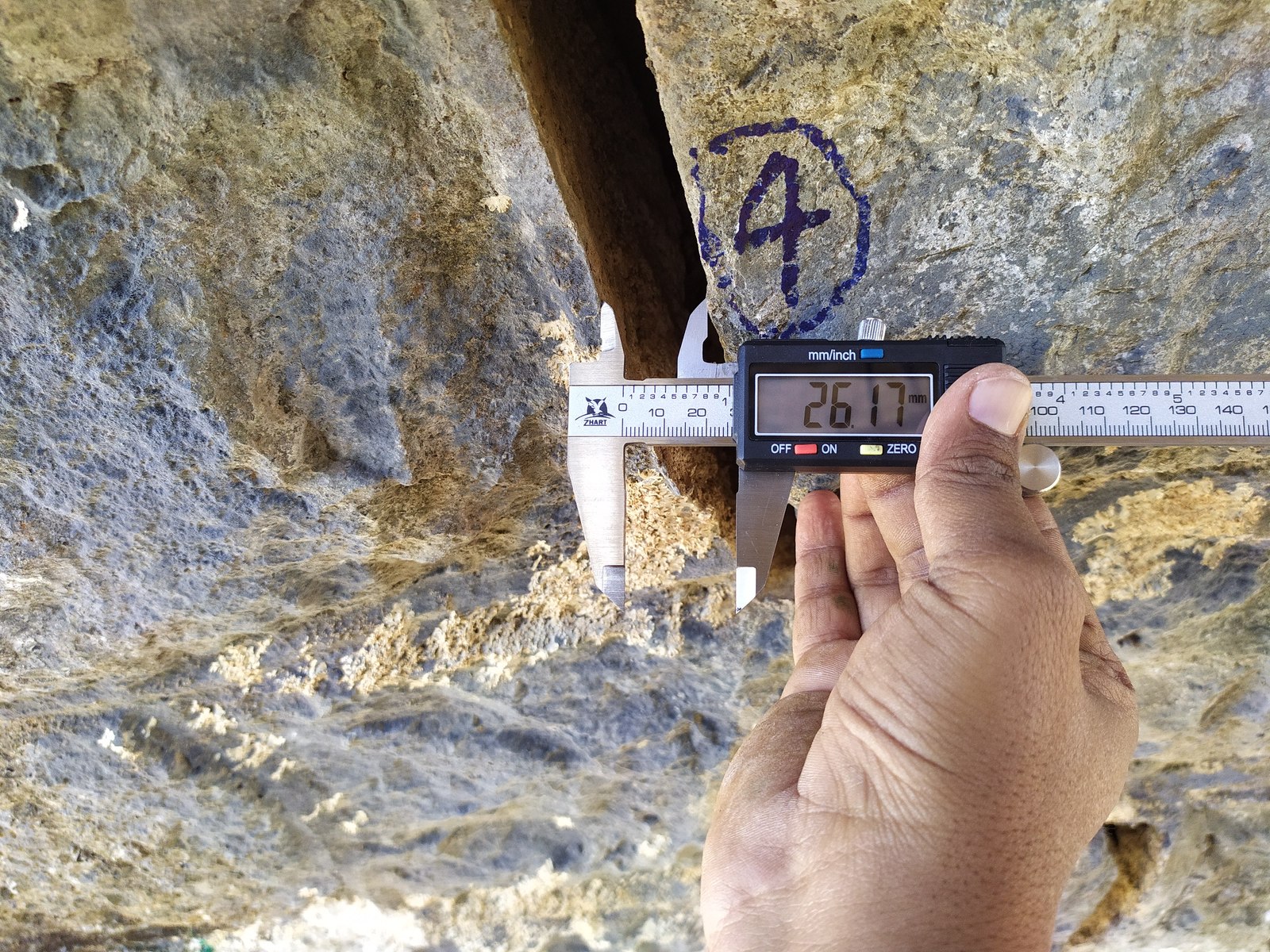
At Kasara, a 160-year-old stone masonry arch bridge – three arches spanning 15 metres each, for a total length of 75 metres – carries live vehicular traffic today, more than a century and a half after it was built. Visible cracking in the masonry raised an obvious question that no visual inspection alone could answer with confidence: is this crack dormant, a scar from long-settled movement, or is it live – still opening under load, and getting worse?
That distinction matters enormously for a heritage structure still in service. Hone SHM was engaged to instrument the bridge and answer it with data, not judgment calls.
Scope of Work
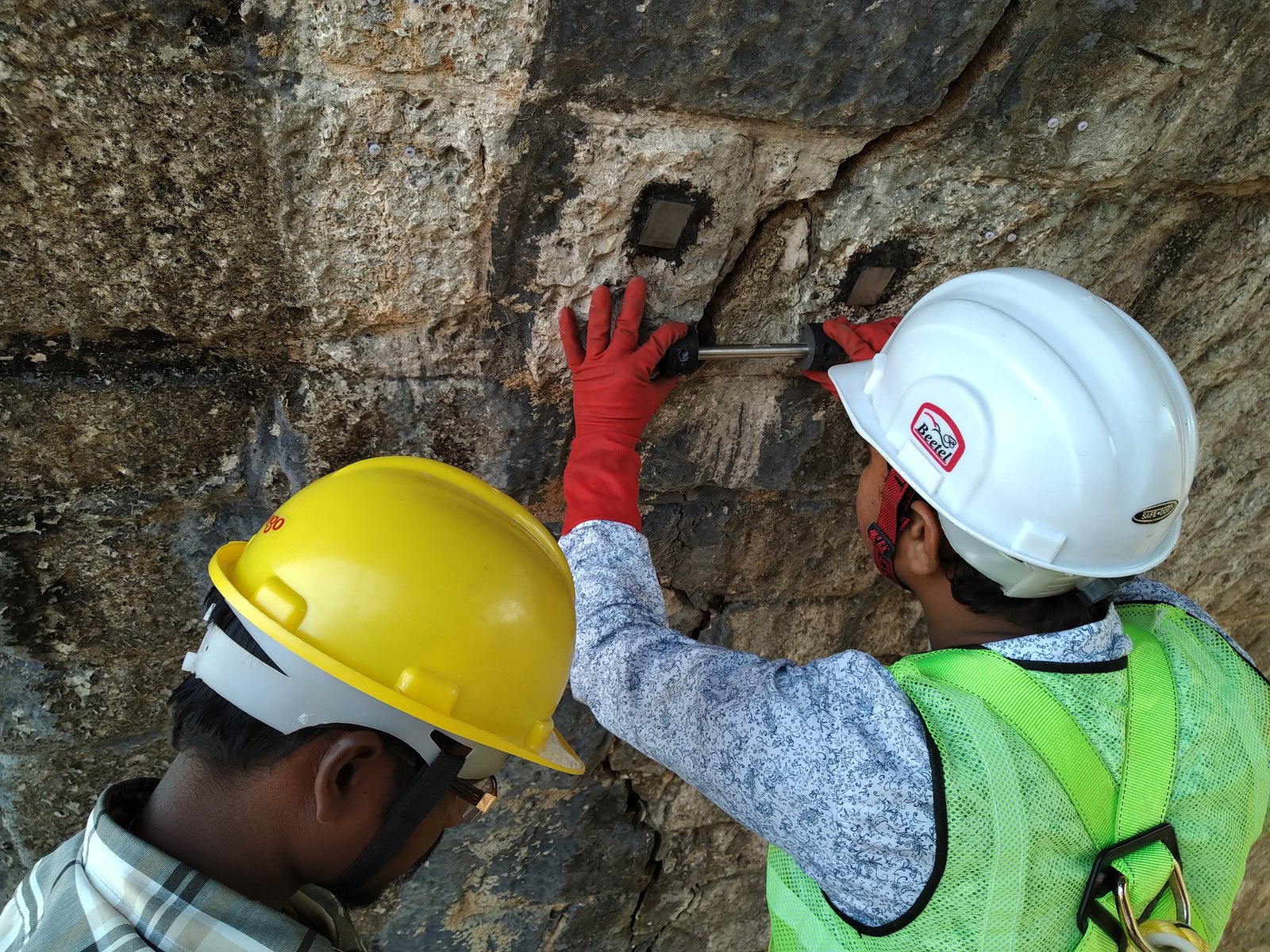
- Crack-growth monitoring across identified cracks.
- Tilt monitoring of the arch structure.
- Vibration monitoring under calibrated vehicle loading.
Method
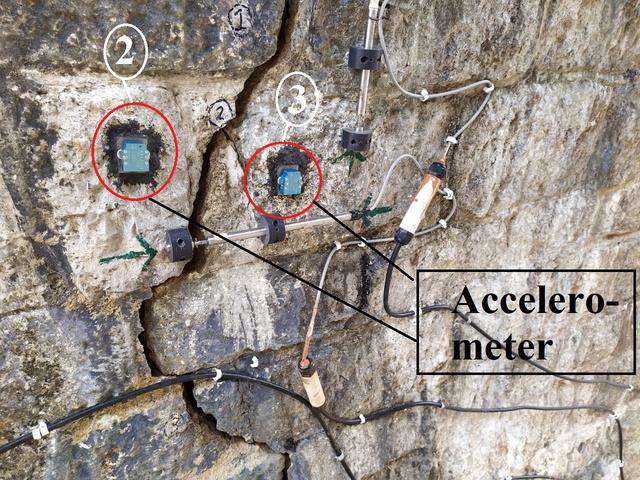
Accelerometers were mounted directly onto the masonry immediately either side of the crack under investigation, positioned so that any relative movement between the two crack faces would register as a measurable difference in their vibration response. A calibrated test vehicle was then driven across the bridge, moving between two marked locations on the deck, providing a repeatable, known excitation whose effect could be tracked as it propagated through the structure and across the crack.
Displacement time-history data was captured from each accelerometer channel and converted to the frequency domain using Fast Fourier Transform (FFT) analysis, isolating the dominant frequencies of structural response on each side of the crack for direct comparison.
| Structure age | 160 years |
|---|---|
| Structure type | Stone masonry arch bridge, 3 arches |
| Span per arch | 15 m (total length 75 m) |
| Loading | Calibrated test vehicle, controlled transverse & longitudinal runs |
| Analysis method | Displacement time-history & FFT of transverse response |
Findings & Significance
Comparing the displacement time-history and FFT response recorded across the crack allowed the team to characterize whether the two faces of the crack were moving together (indicating a dormant, dead crack) or independently under load (indicating a live, active crack requiring intervention). This data-based classification gives the asset owner a defensible basis for deciding between continued monitoring, scheduled repair, or urgent closure — rather than relying on visual judgment of crack width alone.
A crack that looks alarming can be structurally dormant; a hairline crack can be actively growing. Only instrumented monitoring tells the two apart.
This engagement was significant enough to be documented in the peer-reviewed literature: our founder, Dr. Mahesh Varma, co-authored “SHM of a severely cracked masonry arch bridge in India: Experimental campaign and adaptive NURBS limit analysis numerical investigation” (Varma, Grillanda, Milani, Ghosh & Halani, 2021, Construction and Building Materials, 280, 1–24), combining this kind of field experimental campaign with advanced numerical limit-analysis modelling of masonry arches.
It reflects the same body of research our team applies to every stone masonry structure we monitor – from arch bridges to the largest masonry domes in the world.